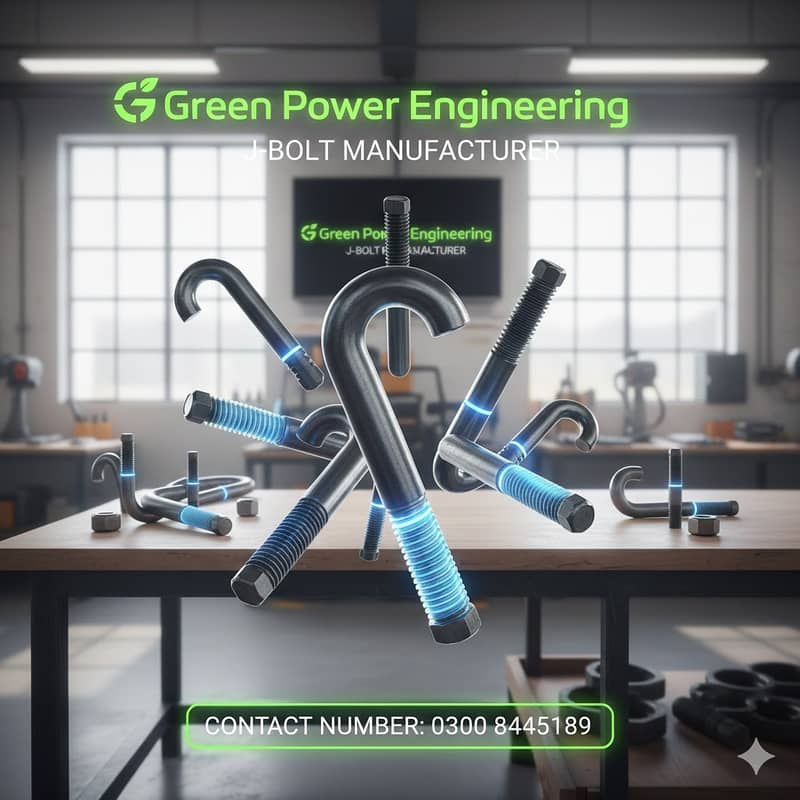
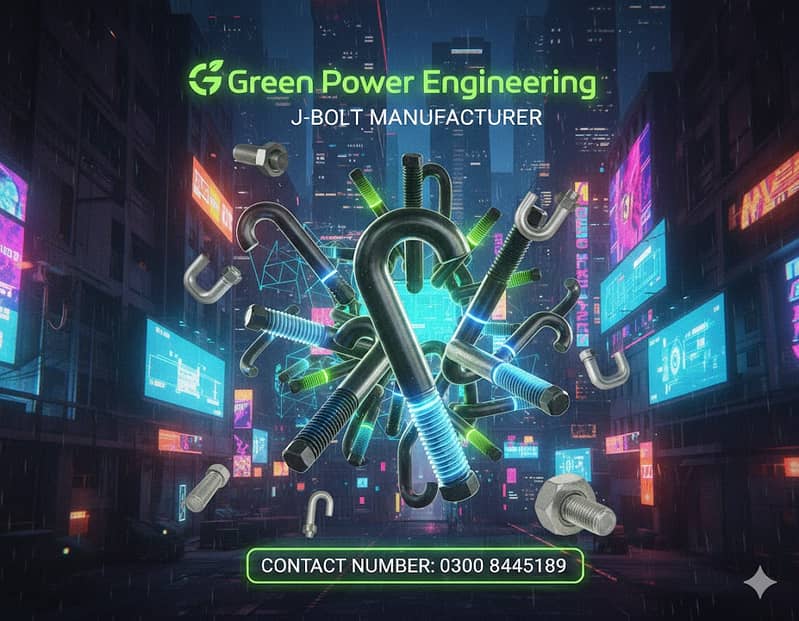
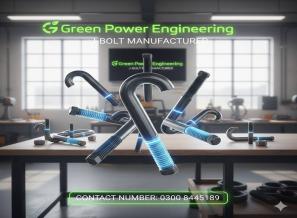
A J-Bolt is a specialized type of anchor bolt named for its distinctive shape, which resembles the letter "J" when viewed from the side.
Key Features and Design
Shape: It has a curved hook on one end and a threaded section on the opposite end.
Anchoring Mechanism: The "J" shape or hook is designed to be embedded into wet concrete (or sometimes hooked around structural elements like rebar) as the concrete sets. This hook resists pull-out, providing strong anchoring.
Fastening Mechanism: Th...
A J-Bolt is a specialized type of anchor bolt named for its distinctive shape, which resembles the letter "J" when viewed from the side.
Key Features and Design
Shape: It has a curved hook on one end and a threaded section on the opposite end.
Anchoring Mechanism: The "J" shape or hook is designed to be embedded into wet concrete (or sometimes hooked around structural elements like rebar) as the concrete sets. This hook resists pull-out, providing strong anchoring.
Fastening Mechanism: The threaded end protrudes above the concrete surface, allowing for the attachment of nuts and washers to secure a structural component (like a column, beam, or post) to the foundation.
Material: They are typically manufactured from durable materials like carbon steel or stainless steel, and often come in various finishes such as hot-dip galvanized or zinc-plated for corrosion resistance.
Common Applications
J-bolts are primarily used as anchor bolts in construction, civil, and industrial projects to secure an object or structure to a concrete foundation.
Foundation Anchoring: Used to anchor structural elements like steel columns, beams, or wooden sills to concrete footings and foundations.
Light/Medium Load Structures: Commonly used for securing light poles, highway signs, fence posts, and sheds.
Roofing/Cladding: Employed to secure trusses, rafters, or roofing panels to concrete or masonry surfaces.
Machinery Mounting: Used to anchor heavy industrial equipment and machinery to concrete floors to prevent movement and vibration.
In general, J-bolts provide high holding strength and are a staple fastener for creating secure, stable, and long-lasting connections in structures.
Show More